Slope Size & Shape
As you would expect, bigger slopes can produce bigger avalanches. Smaller slopes generally pose a lower risk, making them a better route choice.
In terms of slope shape, avalanches happen more where slopes become steeper as you descend. The point where the angle steepens most significantly is known as a convex roll. Avalanches will often fracture directly at or just below the roll.
Concave slopes, where the slope gradually flattens as it descends, are generally safer, as are planar slopes, which are slopes that maintain an even angle. But if a slope is steep enough, avalanches can occur regardless of the slope’s shape.

Convex slopes are more likely to be trigger points.
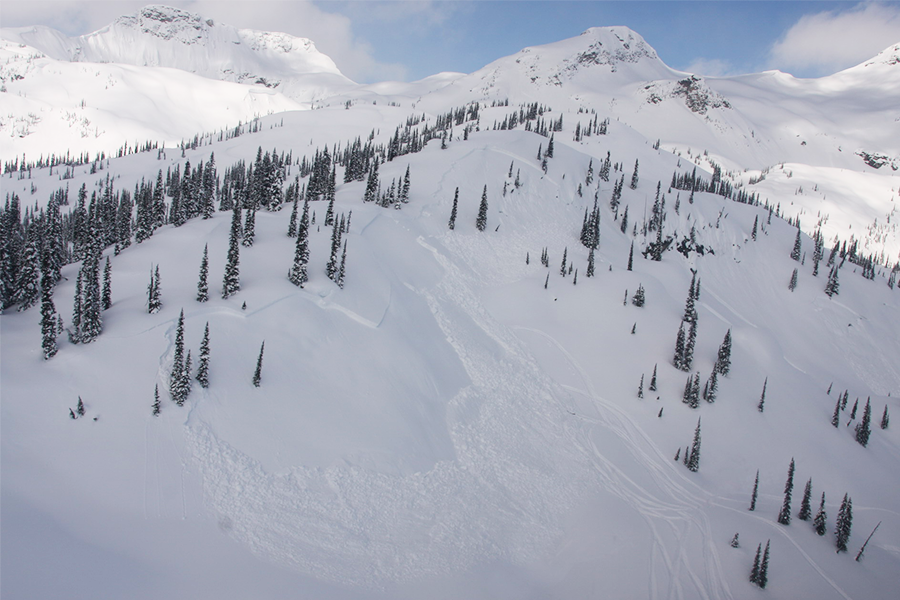
This avalanche fractured at the top of a convex roll.